Being able to get rid of the jib efficiently is a key part of dinghy cruising for those of us with a jib. I do love the jib as it helps with pointing and helps me sail better. I also find it very handy to sail without it through busy moorings when not hitting something is more important than speed.
Many cruisers use self furling jibs and I started out with this. They are not without their issues though:
- They can fail when you need them most.
- The leave windage aloft, the head rarely rolls tight in a blow.
- Provision must be made for not tangling the whole thing around the forestay.
- They put a twisting motion on halyard causing the wire to unwind it.
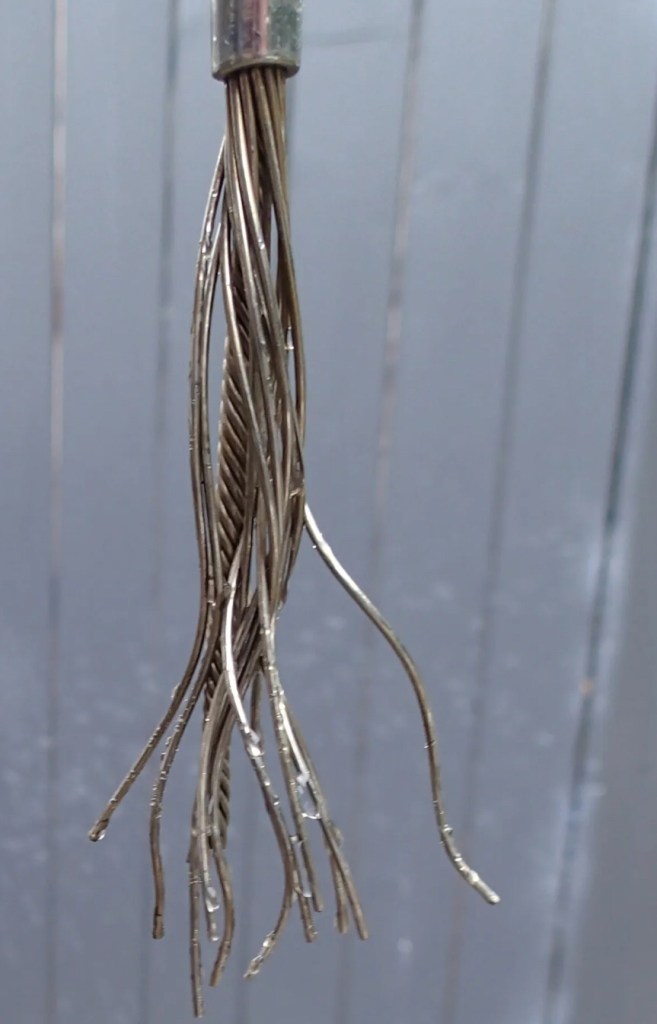
Don’t get me wrong a good roller furling system with a solid luff eliminates most of the above but it’s not cheap. I’m a budget cruiser.
I started with a roller furling but quickly resorted to just dropping the jib. I had find untwisting damage to the wire luff. My jib has a wire luff and simple plastic twist hanks. It was fine but the hanks soon un clipped and left a sagging luff.
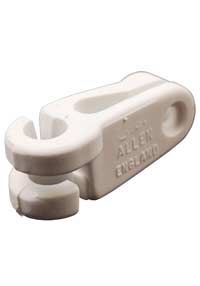
Next I added a two to one down haul on the halyard and didn’t worry about the hanks. This was OK but not quick and I didn’t like stressing everything so much.
During Cobner fortnight I was a frequent visitor to the various chandlers and one had the real McCoy Swedish bronze piston hanks. A few brass eyes in the luff and I was sorted. I tested and then refined with a continuous halyard. This not only acts as a halyard, is a down haul but also can’t be lost up the mast and is less prone to tangles.

From the head the halyard goes to the halyard block at the hounds, down the the outside of the mast to the halyard cleat. The tail then goes back to a block at the stem fitting and back upas a continuous line to the head on the jib.
There was much discussion at Cobner and post camp emails with references to DCA articles as to improvements to this system. (Dinghy Cruising No. 253 has the article on page 72/73) A further improvement being to hank the luff onto the down haul part of the halyard and have the tack of the jib on a block so it can be pulled in and out from the stem. This allows for complete removal of the jib but adds complexity.
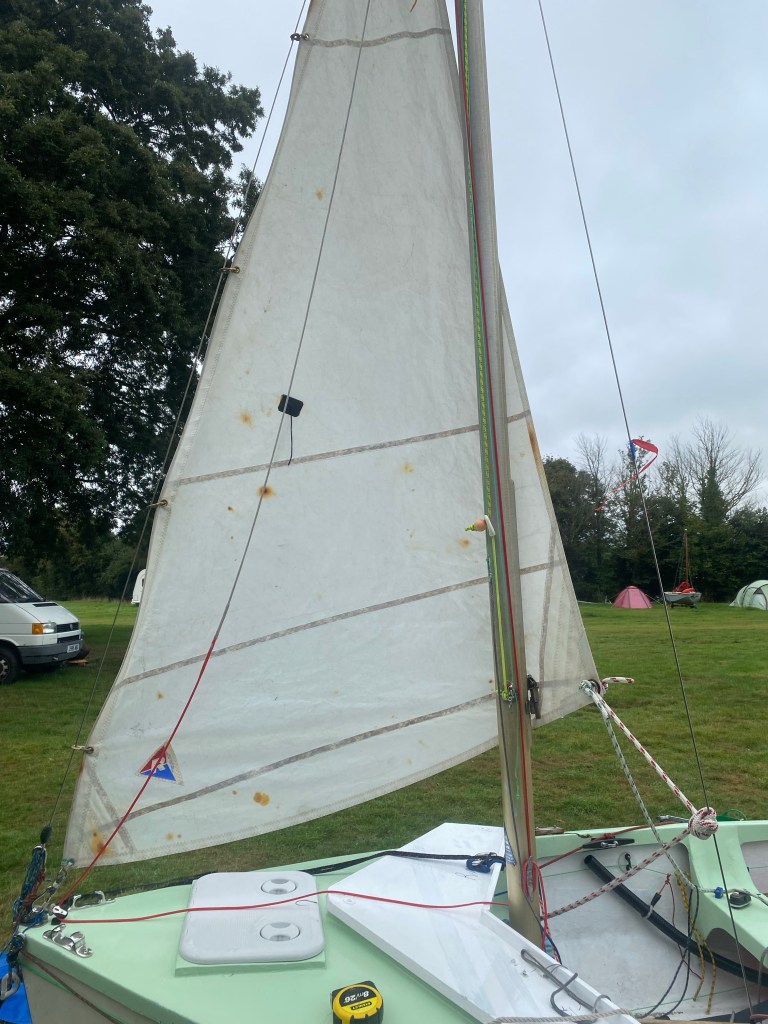
I’m happy, as are others, to leave the jib on the foredeck and had piece full nights of sleep like this. On many occasions you will put ashore at the end of the day so can remove the jib fully if required.

 tinkboats