I’ve been designing boats for forty five years plus and it’s an activity I never get bored of. It’s mainly just daydreaming but something I love doing.
I love the Gull but could there be better solo dinghy cruiser?
I play a lot with the idea of a tacking Proa. The problem I always come up against is the auxiliary propulsion, don’t want a motor. So this concept is more a narrow monohull with a small ama (outrigger) well forward. This is out of the way of the oar stroke and is only really intended as safety stability.

The board is always an issue as it gets it the way of a sleeping area. So the board has been offset and there’s a removable thwart for light air sailing and rowing. A hammock type bed would be used.
Big tanks for and aft provide storage with additional room on top of the sunken foredeck. There would be a fabric foredeck to keep the spray out.
The cockpit area is kept nice and clean so plenty of room for ground tackle. The whole thing I’d easily split down the vaka (mail hull), side benches, aka (the beam) and the ama (outrigger)
I then compare this design against:
The Gull
An Enterprise (light, spacious and low cost)
A theoretical new design of monohull.
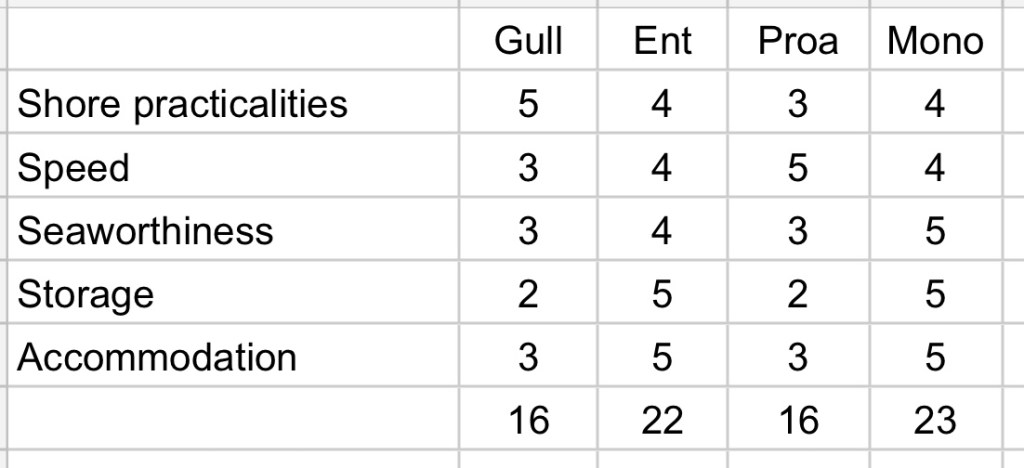
Lack of space, complexity of setup and overall safety concerns led me to shelve the Proa.
The idea of a new monohull started to look appealing so worth a look at.
I’m a big fan of flat bottom skiffs especially the Echo Bay Dory Skiff (11′ 7″) and the Goat Island Skiff (15′ 6″) but want something between the two. The design I worked on is 4200mm (13’ 9”) but would adjust that when laying out the panels to maximise the use of the sheets of ply.
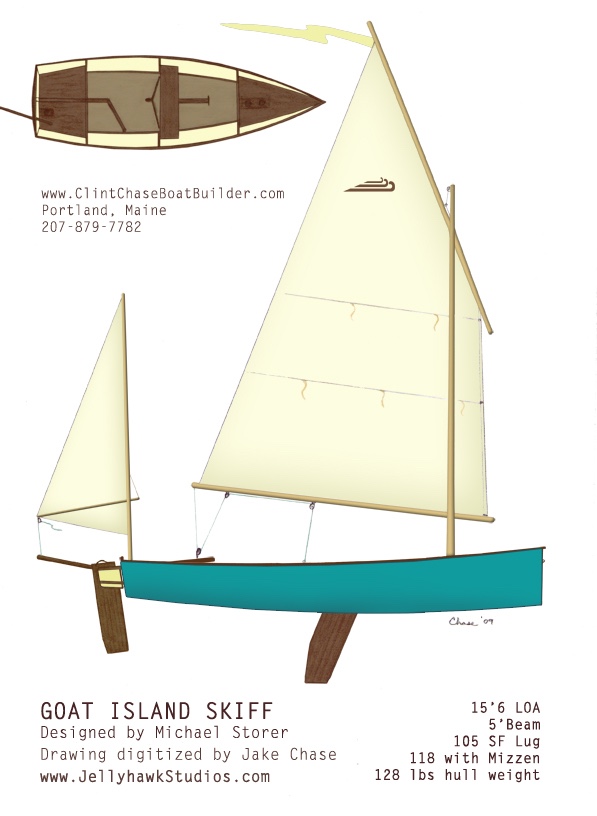
The EBDS and GIS have no and little forward rocker which keeps the bow in the water to reduce any possible slamming. I copied this feature and then rocker at the stern to reduce transom drag.

The flat bottom allows for drying out but results in large flat panels which isn’t ideal. Taking the ideas used on the GIS and it’s designer Michael Storer, rub rails have been added to the bottom and I would also add transverse ribbing on the inside. This divides the bottom into smaller panels and allows for 6mm ply and a light boat.

Note, all these designs are concepts to think about layout, there are no buoyancy calculations or other details behind the design.
The centre board is again off set ant this has been very carefully positioned. The thwarts are removable so that they can be repositioned near the centre, the centre board positioning provides boards to give a platform of over 650mm. There is plenty of room either side for feet and I imagine I can actually sleep to one side.

There is a thwart-ships cross brace that not only supports the centre board but also supports a removable thwart. The cockpit again is minimal for ground tackle and also large storage tanks fore and aft.

The tank at the stern is particularly large and there is some reasoning behind that:
👍 Shorter spans for the thwarts / sleeping platform
👍 More storage
👍 Aft seating, good for down wind
👍 Less cockpit volume to get swamped
This design has a curved ply upper foredeck with bulwark which probably adds very little weight. It does however complicates hatch access.
With just the the bow and stern tanks stability after a capsize would not be optimal. I added then external wing tanks which would not only be good for swamped stability but also great secondary stability. They have about 70kg of buoyancy and being a good distance from the centre line should work well.

I’m not a fan of closed tanks as water can sit in them and cause rot. The bow and stern tanks have big hatches so are easier to keep an eye on and maintain.
The next development was instead of the tanks was to use inflatable beach rollers. Modelled are 250dia x 1600mm and they provide 77kgs of buoyancy. These have many advantages, cheaper, less building, maintenance free and obvious can be used to move the boat. They my seam an odd addition but it’s a system well proven for RIBs.

For inland and light wind days they could be left off.
I’ve now added a shorter flat foredeck allowing access to the hatches, these are off the shelf ones but they could equally be bespoke ply. The gap between the mast and foredeck could easily be filled in with the fabric cover. Alternatively a removable or forward folding infill looks more the ticket

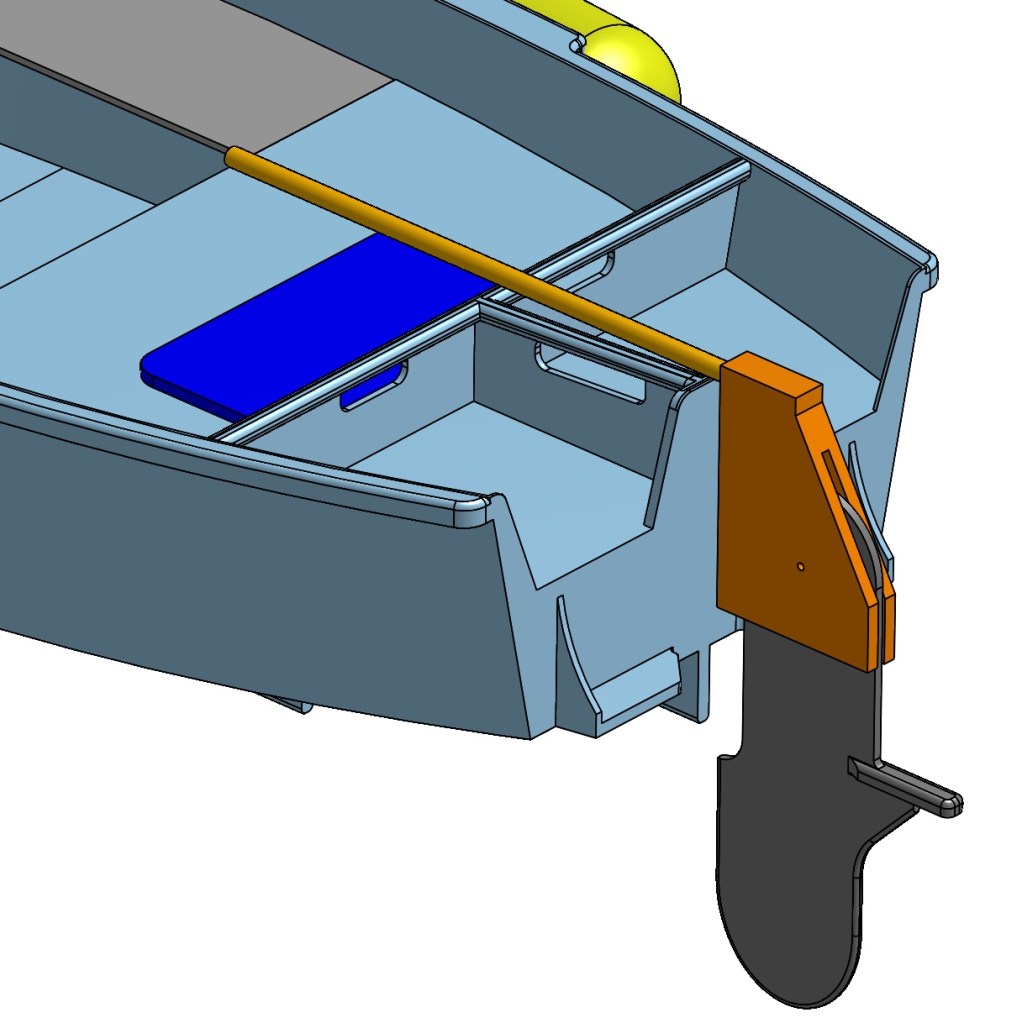
Compromises are part of designing anything. Being able to have sufficient freeboard for seaworthiness is in conflict with getting back onboard after a capsize.
I’ve experimented getting over the transom on the Gull and it’s OK but obviously you have to be quick before the bow blows around. I have carried a sea anchor deployed from the bow, but never used it. The transom has been lowered to the level of the aft tank and then a second one placed inboard. Various handles have been included in the structure. On the bottom edge of the transom and the aft edge of the udder steps have been added. A step has been added to the aft end of the rudder blade
So is it worth all the effort. Bit bigger so not as practical shoreside. Longer length so faster. Should be more stable and seaworthy, more storage and therefore accommodation. Some nice improvements.

But then looking back a the scoring a little bit of modification to an Enterprise would produce a fine boat.
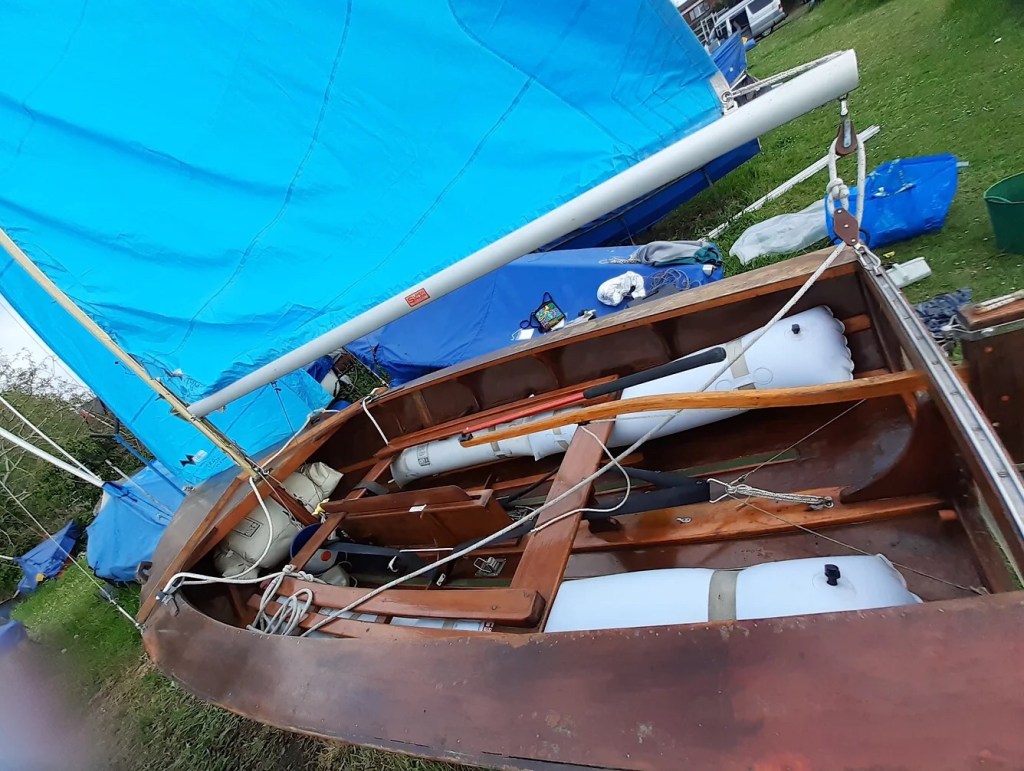
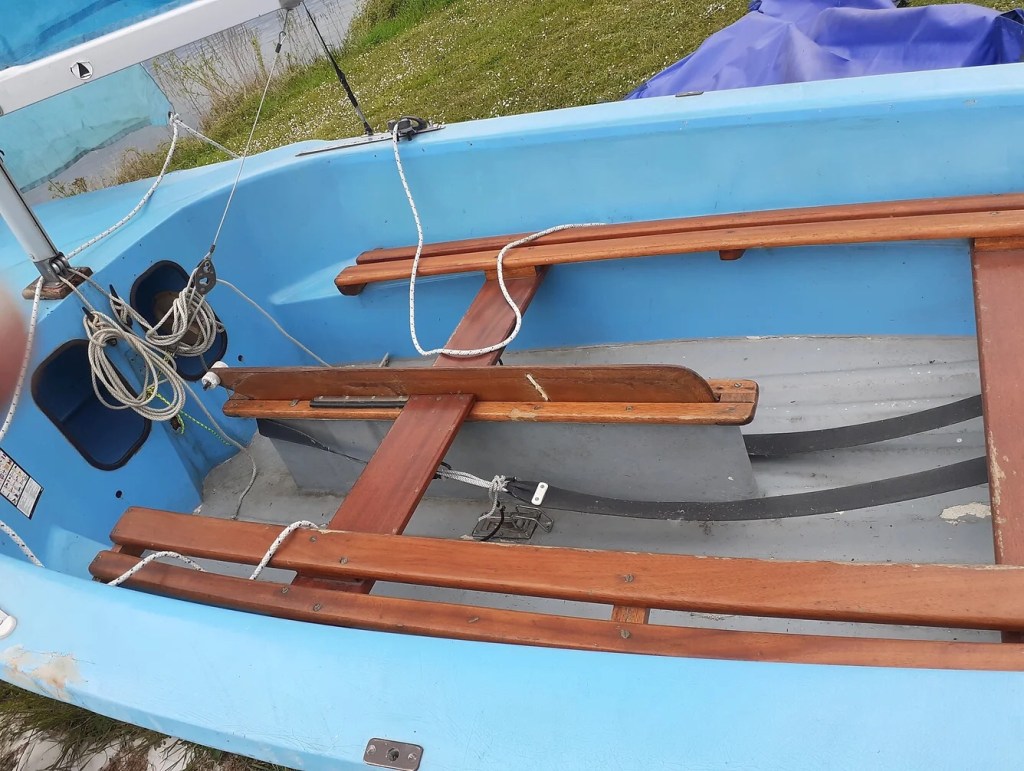
But at the end of the day working on making the Gull even better will have to do for now, and that’s not at all a bad thing.
 tinkboats
Just discovered your blog, but have seen a lot of your proa posts over the years.
I’ve been regularly opening the webpage for Atkins alone dinghy, which has a similar mission statement. It might be satisfying to hear it’s very close in dimensions to your design here! https://atkin.mysticseaport.org/Sail/Alone.html
The other similar boat that springs to mind is the Duo by Woods design. A much smaller boat but it has thoroughly tested out the inflatable sponsons concept. https://duckworks.com/duo-plans/
You’ve probably seen these but thought I’d drop a link just in case.
Keep up the posts!
LikeLike
Thanks Thomas, I know with duo and I was actually sailing ing with Richard Woods this summer I don’t know of Alone so thanks for that link. I always find it useful to come to sources from different directions. I end up with different outcomes. I’m very lucky to be dyslexic. Thanks again
LikeLike