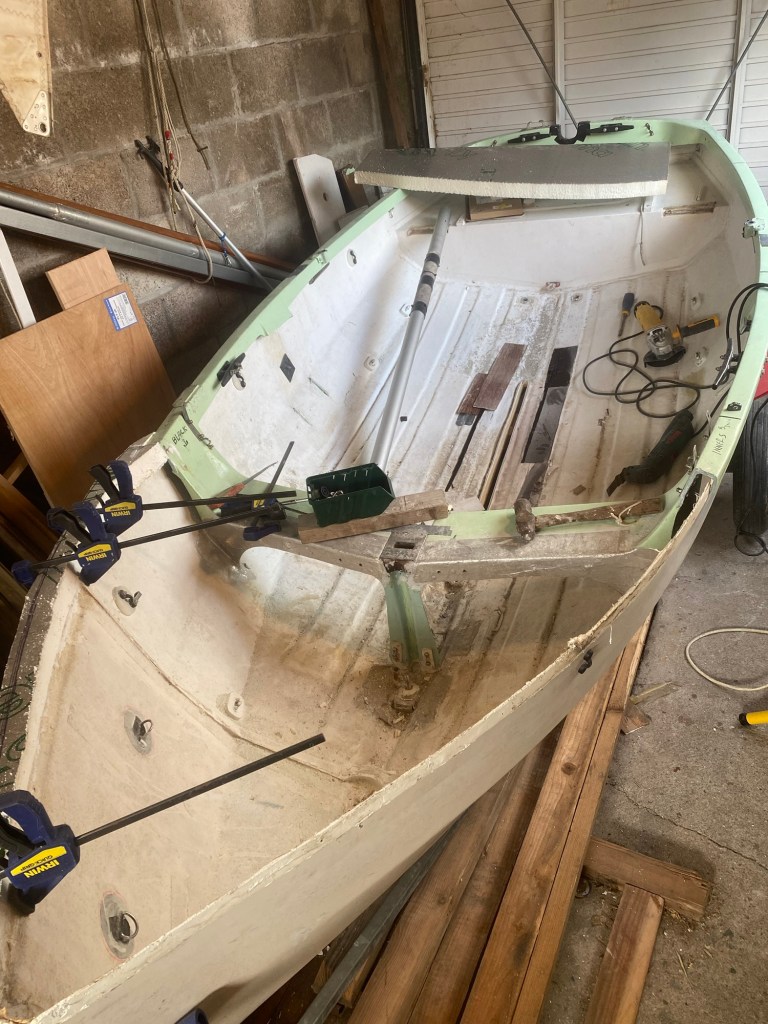
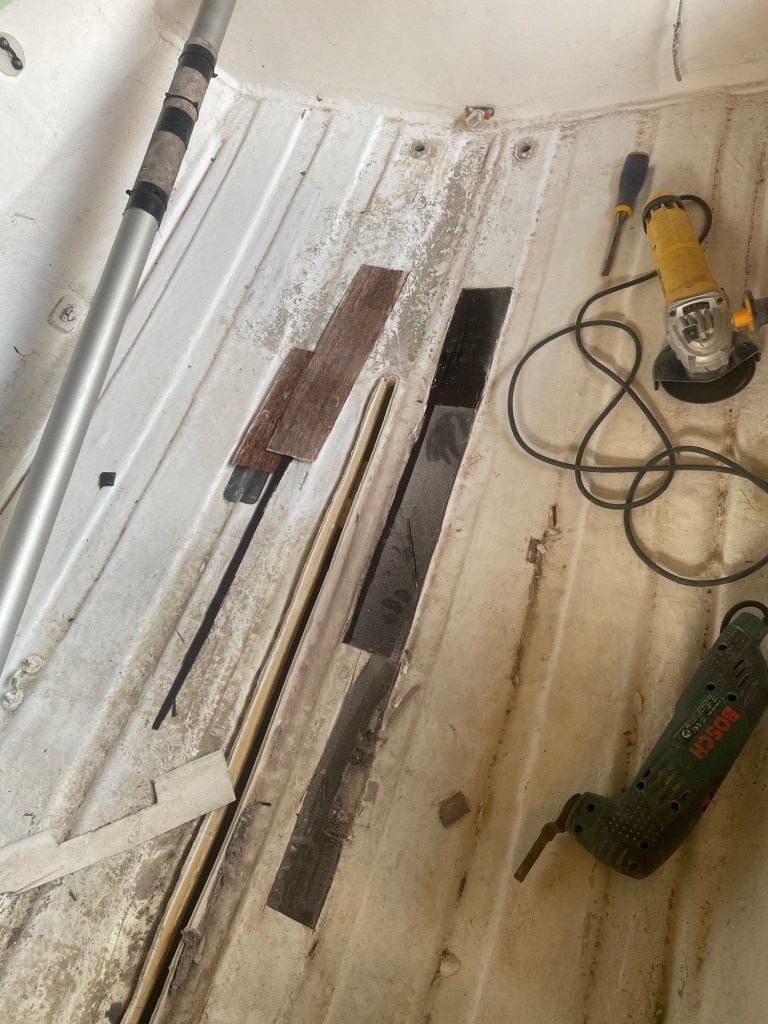
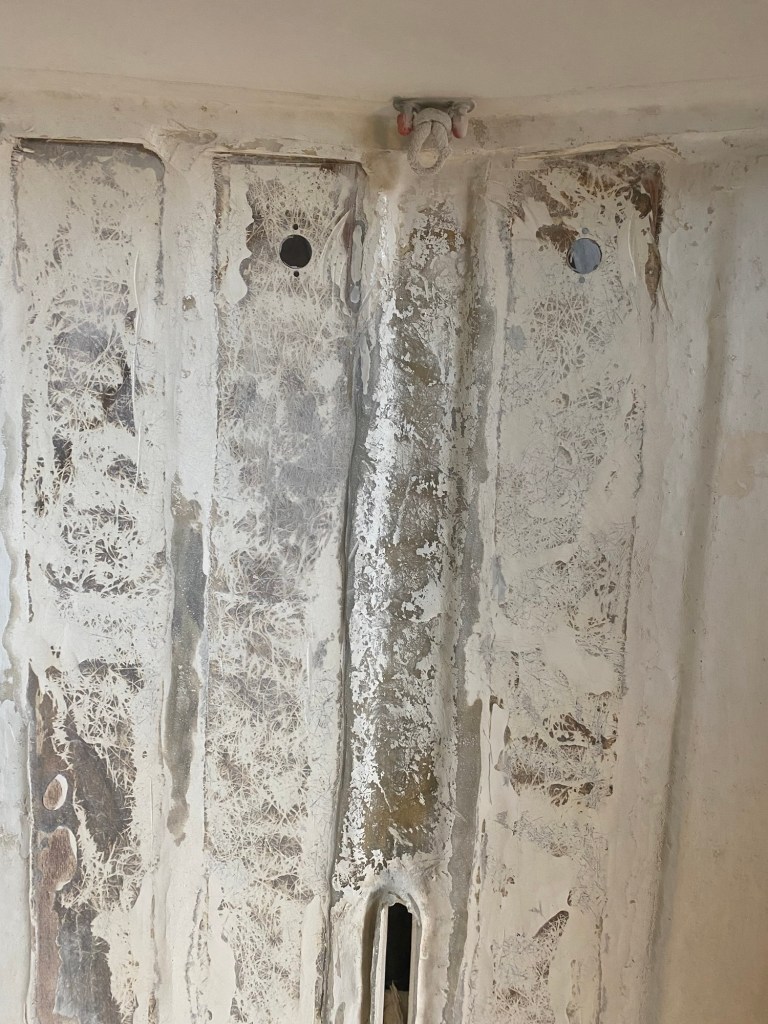
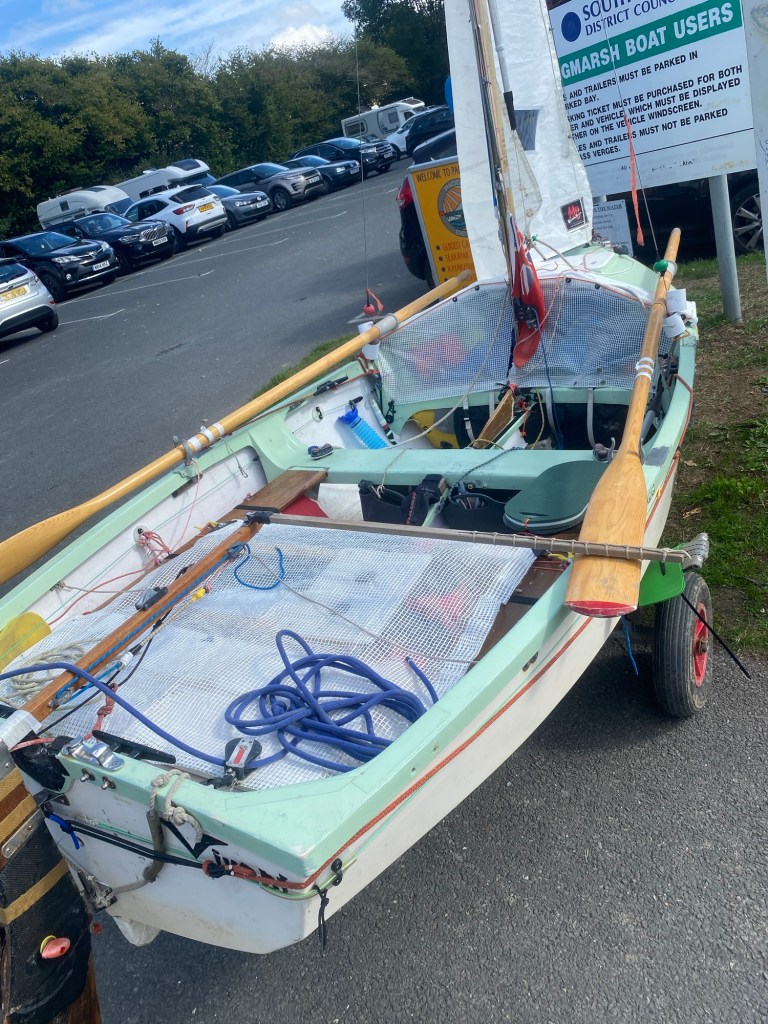
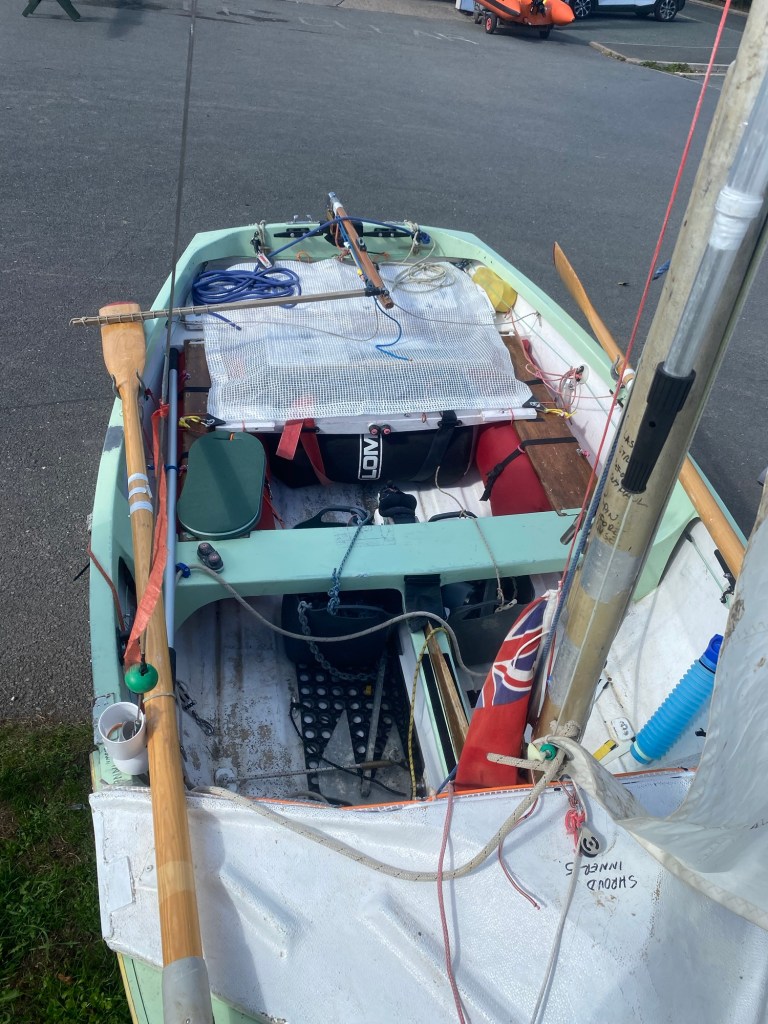
I bought my Gull four years ago, a £360 eBay buy. The Gull was an early Ian Proctor design which was developed into the Wayfarer and highly regarded by Margret Dye. It’s light and easy to haul about, very seaworthy and easy to row. I have cruised my Gull frequently and she is suffering from a hard life, the hull frequently developing holes. Without a big rebuild she wouldn’t viable next year. If I was going to repair he the why not think boldly. I dug deep and thought how I would want to improve the Gull, here are the issues I have:
A: I use a simple tarp over boom as a tent, it would be nice to have more room and simplify the whole system
B: As an 11 foot boat storage can be a challenge and the boat is generally a little messy
C: The jib of a Gull is an issue up rivers where the wind can be chaotic, a cleated jib during a forced tack can lead to water over the gunwale
D: I keep my sleeping boards on the rear locker and so can’t get in it easily
E: I find myself rowing frequently, it’s generally light winds in the morning, so like a 2.7 meter oar, this is a challenge to store
F: Any redesign should end up no heavier in laden and lighter than my current cruising set up.
So this is the solution.
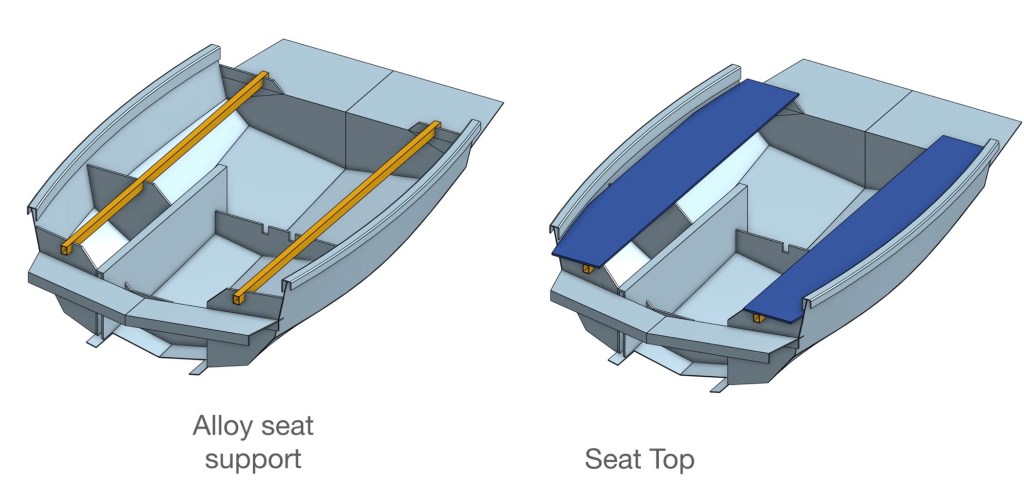
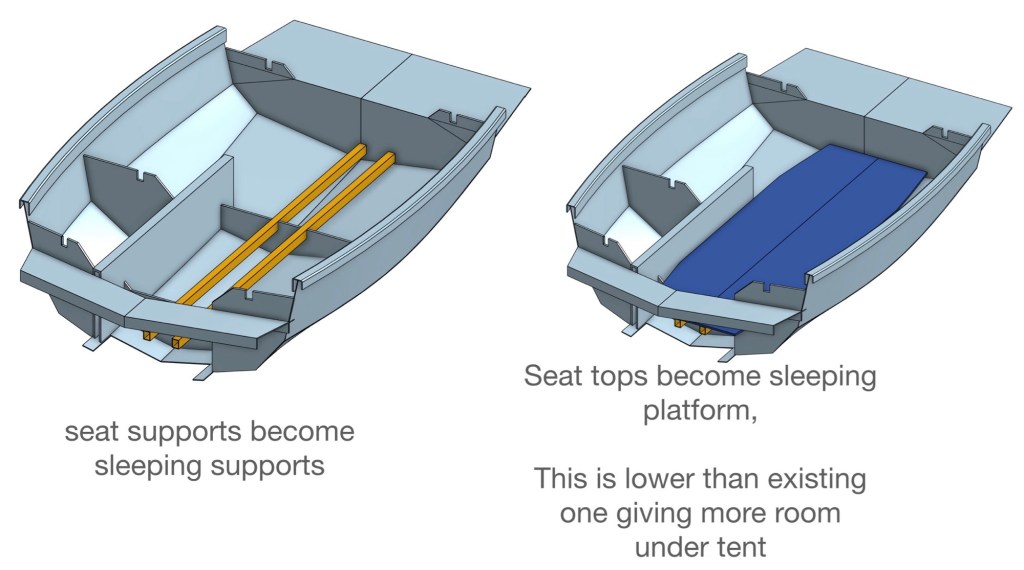
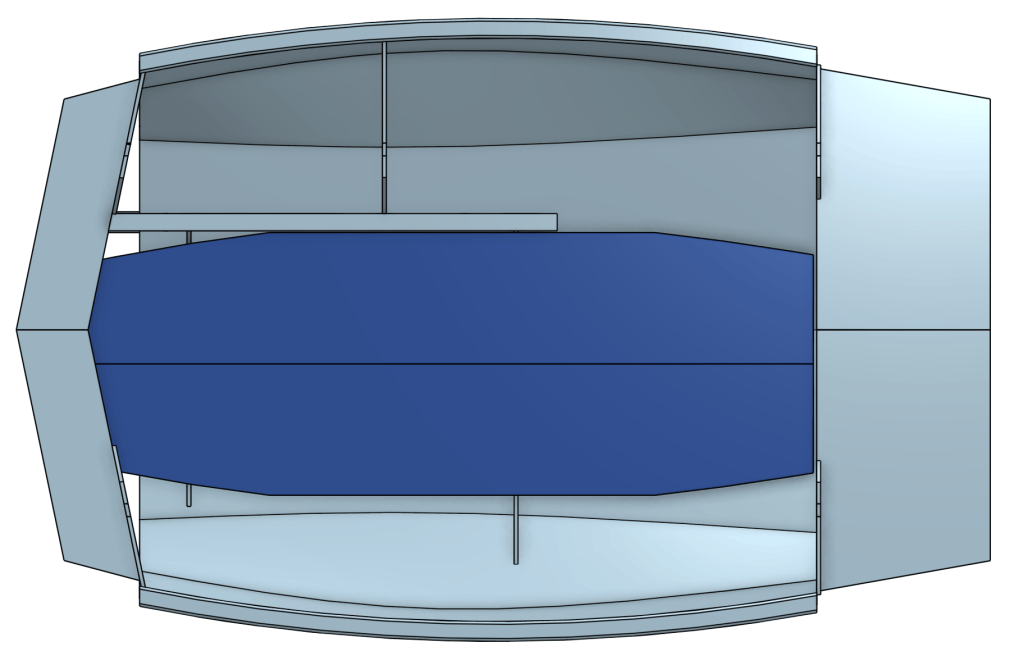
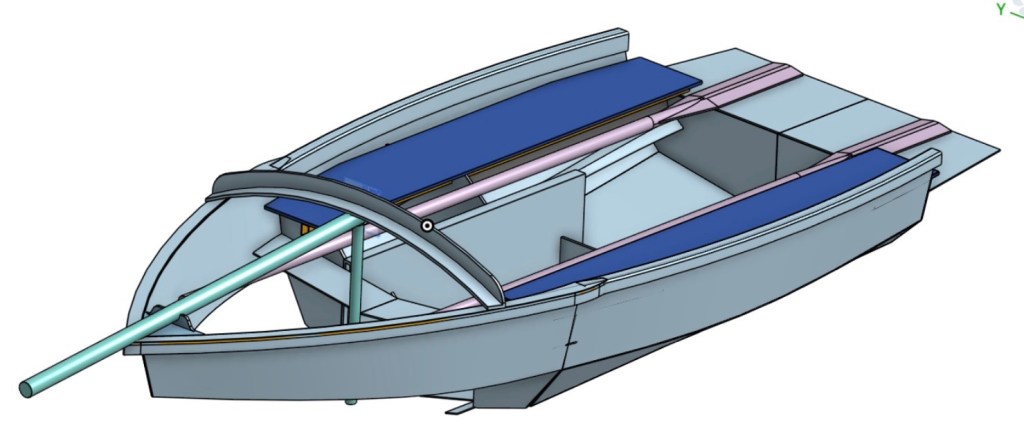
A: Sleeping – the centreboard has been offset giving a suitable sleeping area in the middle of the boat. The side benches and thwarts have been removed, an aluminium section running fore and aft supports a removable a bench top. I’m an engineer 4mm of flex if you’re asking. These are repositioned to become the sleeping platform. Notably out of the bilges but giving lots of extra room under the tent. This saves considerable weight both net and gross and frees up the aft locker access.
B: Storage – I’m a fan of inflatable buoyancy bags and do capsize test and know how much buoyancy I need. The advantage being there is no hidden water in the boat, they are light and don’t require building. I’m very fastidious about securing them so they function correctly. The side ones are staying and the bow tank has been removed and replaced by a 120 litre bow bag. The foredeck is gone and a frame will support a fabric foredeck that is higher than the original and offers some degree of spray
shield. Under here will be use to store light stuff that needs quick access, fenders (these are large a fixed to add further buoyancy) clothing for the day etc. Moving back under each side bench forward of the buoyancy bag are two area that are semi closed in for spare clothes. Anchors will have dedicated storage under the thwart. My sleeping kit is rolled into one large bag and stored in aft area just in front of the rear locker. This is under the tiller and a dead area. I have sailed like this for a few years and it’s a great system. Aft locker is food, cooking equipment and everything else.
C: Self tacking jib, I have added a bow sprit to bring the jib forward enough to allow for a self tacking jib, on a boom. Not only is this self tacking but allows for easy goose winging down wind. As I’m moving the centre board this can go forward to compensate
D: Rear locker access, covered in A
E: Oars storage, by removing the forward tank there is room for them at the edge of the side benches at a lower level. Not shown in the CAD there is a movable thwart
F: Weight, initial I removed 20kg of material which has increased with removal of historical repairs and some sodden stiffening core material. The CAD, with a good safety, margin has me adding in 15kg. Every effort will be made not to add more than is absolutely necessary. Loaded I save the weight of the sleeping platform
There will be people that say buy something else but this will be a very capable and comfortable boat that is only about 88kg and 11ft long. The compactness and easy of launching and recovery is critical to me. The whole point of dinghy cruising is letting the car do the heavy lifting and take you to all sorts of new areas, being agile she gives me access to slipways not usable by heavier boats. Dinghy cruising has gone down the line of heavy boats are safer because they are more stable, I fully agree with that. However large heavy boat becomes a nightmare if it should happen to go over. The Gull has a very seaworthy and forgiving hull shape and being lighter if she does do over there’s a chance of recovery.
That’s the plan anyway, as I said the hull is in need of major repair and if this doesn’t work I’ve not lost much. As a side I’m so taken by the Gull I’ve bought the a second hull which will be my pretty day sailing Gull.